
Pittsburgh, Pennsylvania, USA
Growing Veggies in a Food Desert
by Ellen Kok
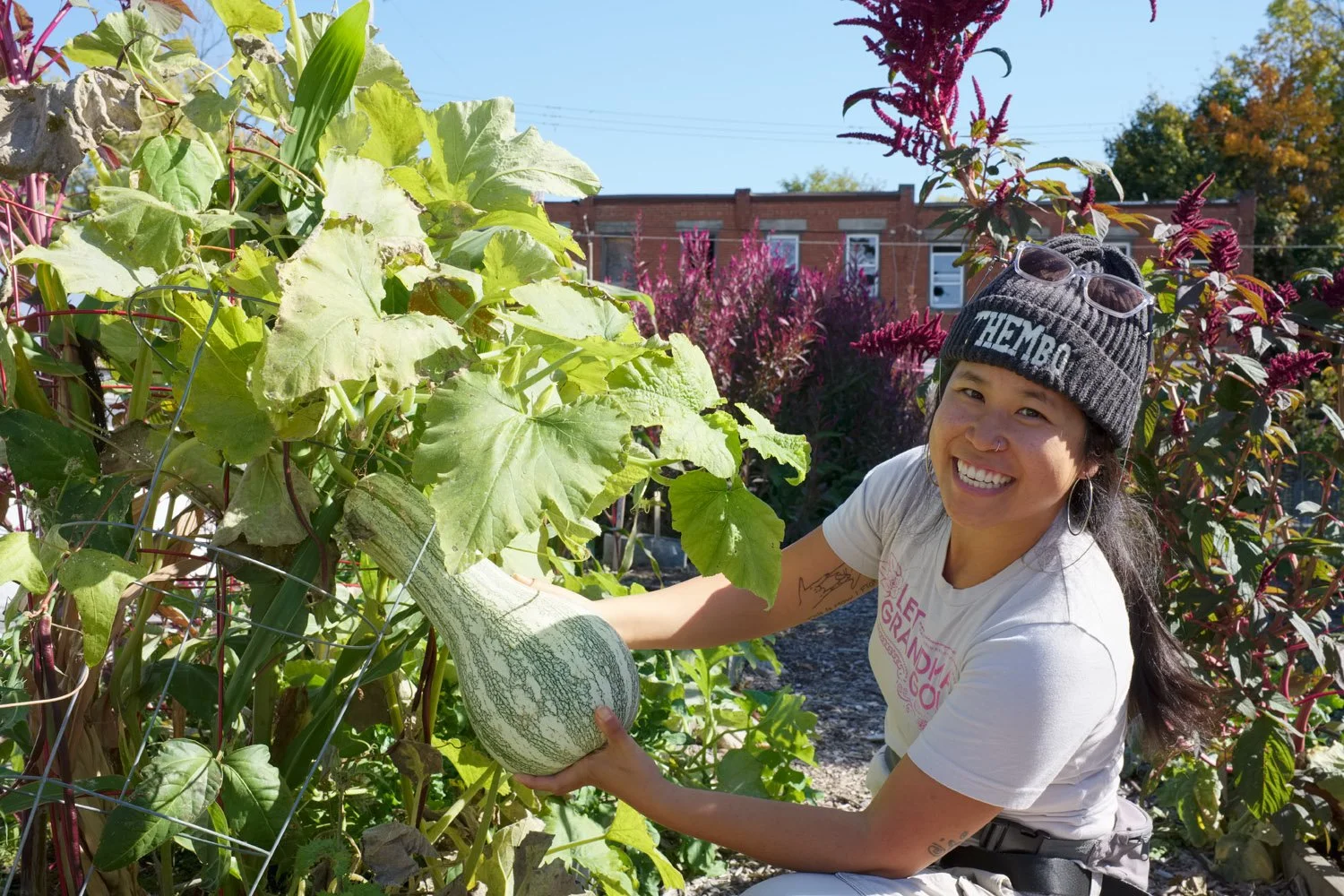
Ash Chan, manager of Oasis Farm, in its vegetable garden in the Homewood neighborhood of Pittsburgh, PA, a food desert. In the back a boarded up row of houses.
Urban agriculture is often promoted as a vital step in creating self-sustaining cities. In any case it makes people more aware of their food, increases knowledge of its production, builds community by involving volunteers in growing it, and reduces the need for long-distance transport.
In Pittsburgh, a large industrial city in the American state Pennsylvania, it also provides people with fresh veggies and fruits in "food deserts", neighborhoods without grocery stores that sell fresh produce. I visited four of Pittsburgh’s many urban farms.
Oasis Farm is an urban vegetable garden in the Homewood neighborhood. Its mission is to “grow food, people and community”. This green space demonstrates how urban gardens can provide people with fresh produce, teach them about healthy food choices, improve air quality and enhance biodiversity in the city. In addition to the vegetable beds and two greenhouses, it includes an "edible park", with apple, plum, peach and pawpaw trees and medicinal plants.
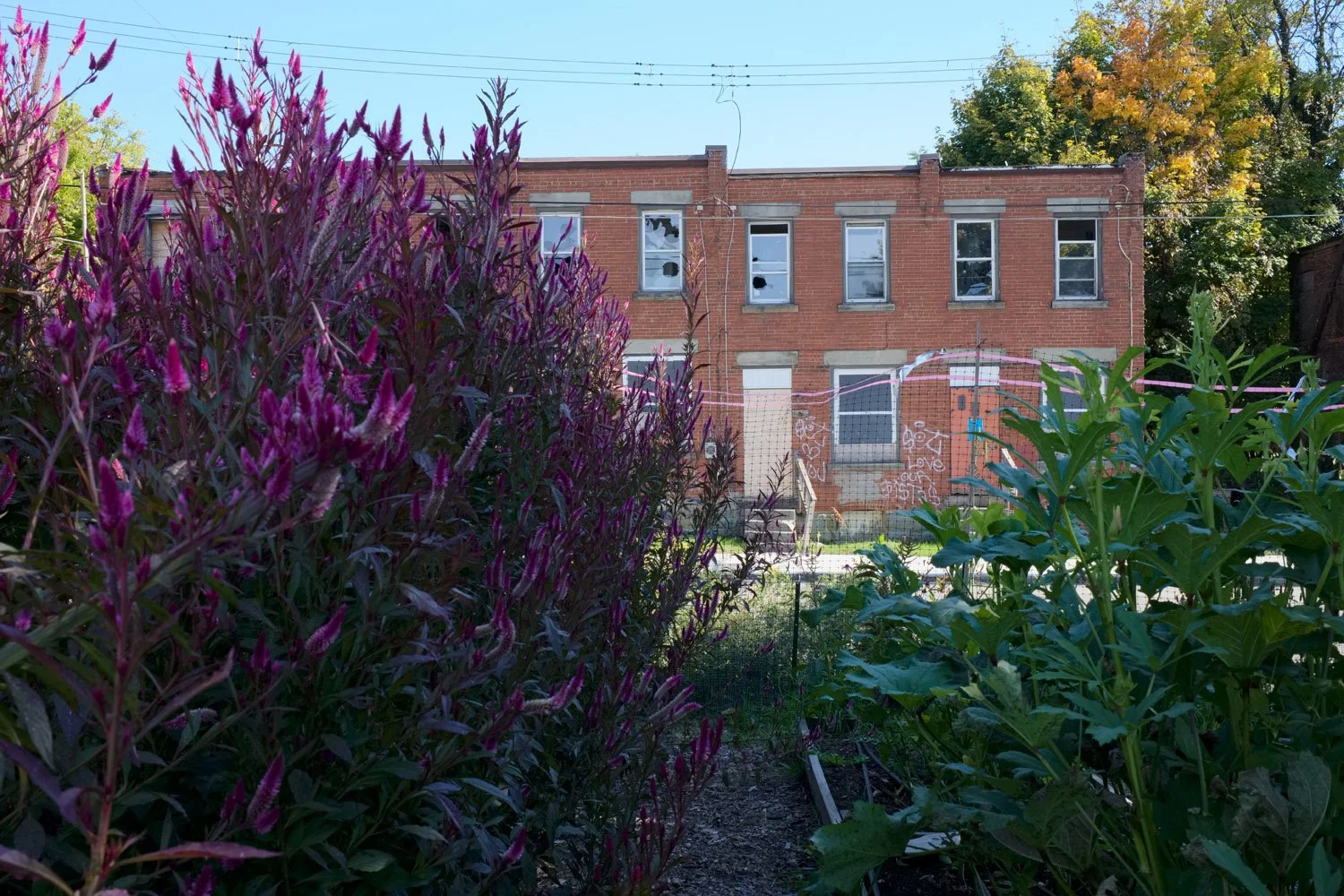
On Oasis Farm’s main plot a lot of "cultural crops” grow, food tied to different African and Caribbean diasporic eating habits. The big, pink plant on the left is called Jamaican Callaloo or Amaranth. Ash Chan tells: "People stew its leaves. The pink part is the seed, we eat that as a superfood.”
Homewood is a food desert. It hasn’t had a grocery store that sells fresh produce since 1994 and, as farm manager Ash Chan explains, transportation is a big barrier for people to getting to stores that sell healthy food. “Oftentimes it takes two or three buses. And you have to walk to or from your bus stop. With your heavy bags. That’s especially a challenge for our elderly folks or those with mobility problems.”
The urban farm provides food-insecure families with fresh vegetables during the growing season and food growing and cooking knowledge through education programs for every age group, from pre-schoolers on.
It is part of The Oasis Project of the Bible Center Church, which works to revitalize the neighborhood with programs focused on education, employment, entrepreneurship, and the environment. All seven buildings and outdoor learning and play spaces of the Oasis campus, located within one square mile along North Homewood Avenue, have been adapted from vacant and abandoned properties.
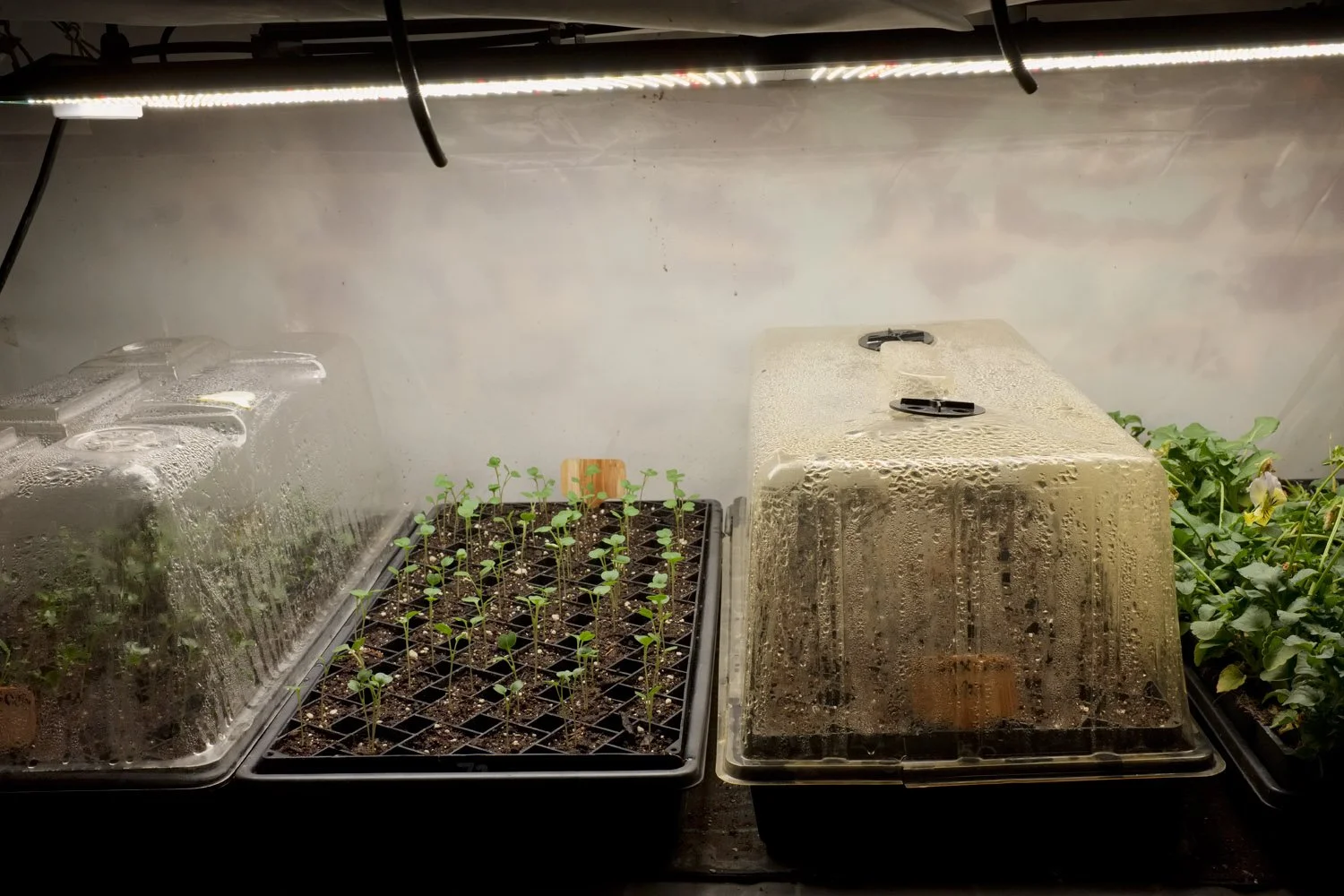
Seedlings grow under daylight lamps in the basement of the Oasis Farm office building. “One thing I'm really proud of this season,” says Oasis Farm manager Ash Chan, “is that I've started a majority of all of our crops by hand by seed. Over 98 percent of what you see in the garden I seeded in our office basement. We also had a seedling sale. People are always interested in seed.”
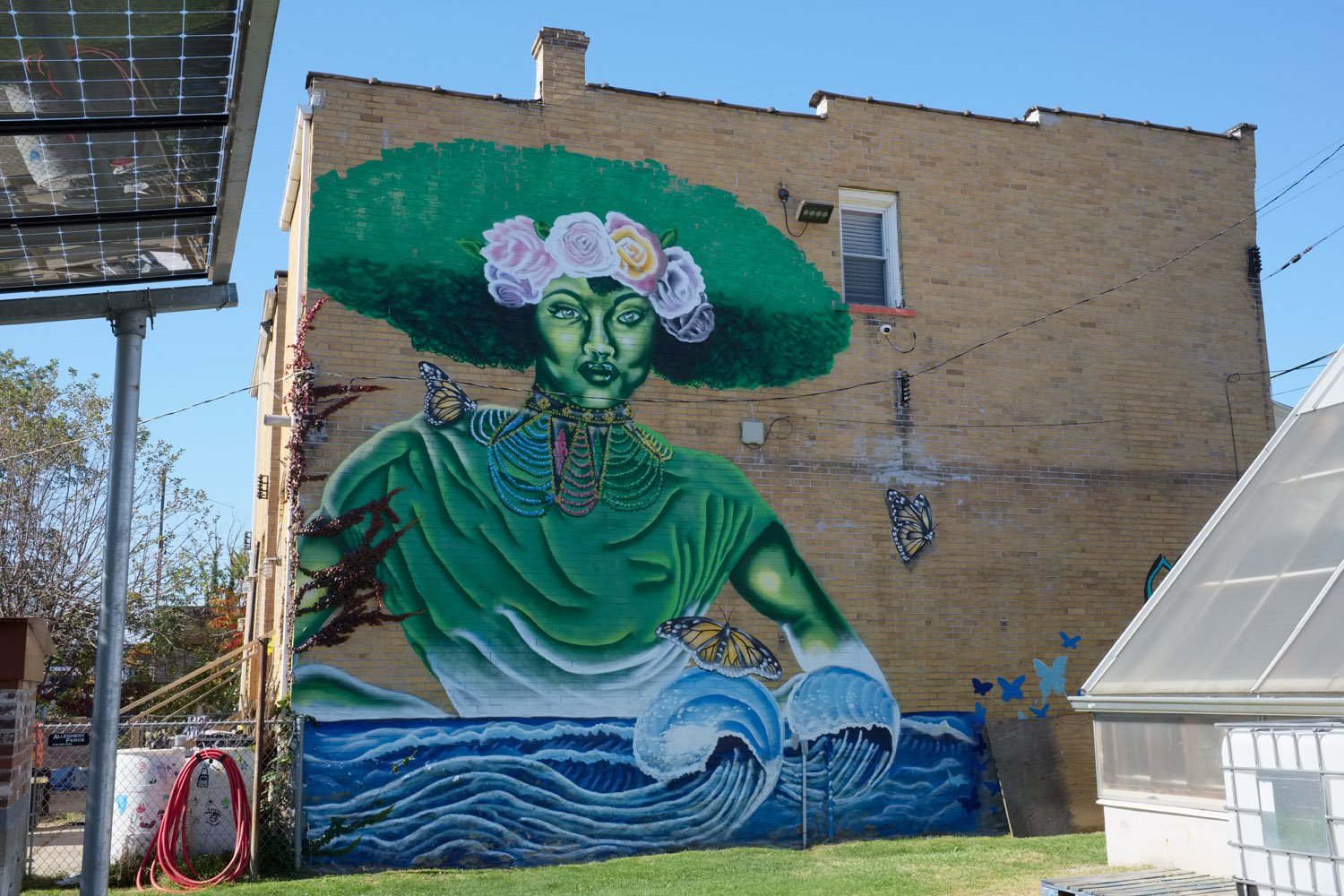
A mural adorns the brick wall of one of the Oasis Project’s buildings, where the farm’s office is. The farm produces it own electricity with solar panels on a roof on the left, that also provides shade for the outdoor education space. The off-grid bioshelter on the right is a year-round heated greenhouse. Its sloped roof is designed for rainwater collection in big, white, plastic containers, a key strategy in urban farming.
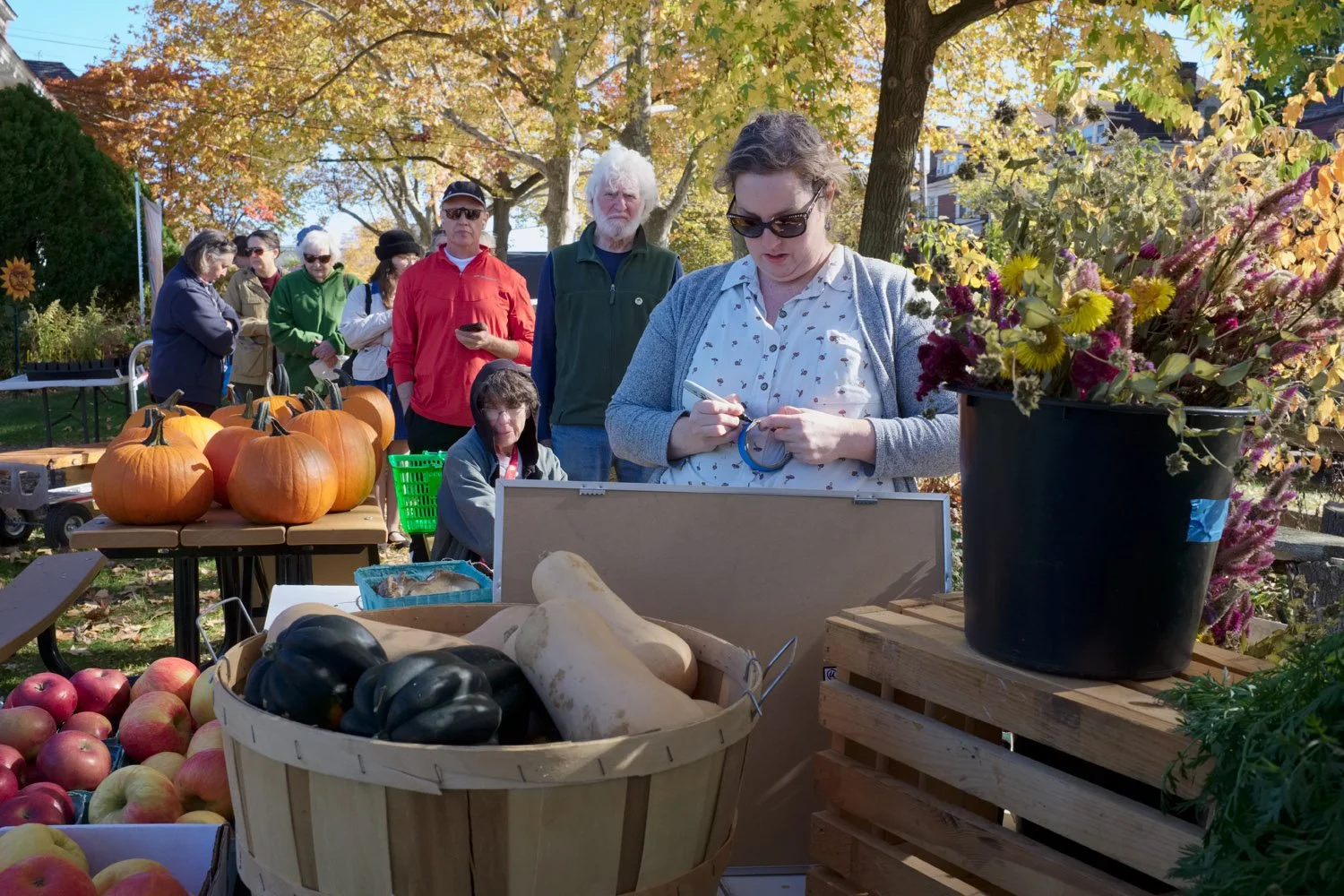
Shiloh Farm runs its own farmstand, every Thursday afternoon from late May through October. While one of Grow Pittsburgh’s employees still marks prices, people are already standing in line to buy the local fresh produce and fruits offered.
Shiloh Farm is one of two urban farms run by Grow Pittsburgh, an organization that develops and supports food-growing initiatives and programs throughout Allegheny County. It has converted a vacant lot at the corner of Homewood Ave. and Thomas Blvd. in the Point Breeze North neighborhood into a small urban farm, with in-ground vegetable production beds, but also plots for herbs, figs, raspberries, and flowers to draw beneficial insects. The farm produces 4,000 pounds of food each year, much of which is sold at Grow Pittsburgh produce stands.
Shiloh Farm also serves as a site for apprentices and volunteers to learn about and try out small-scale urban farming techniques, which people can also apply in their own backyards.
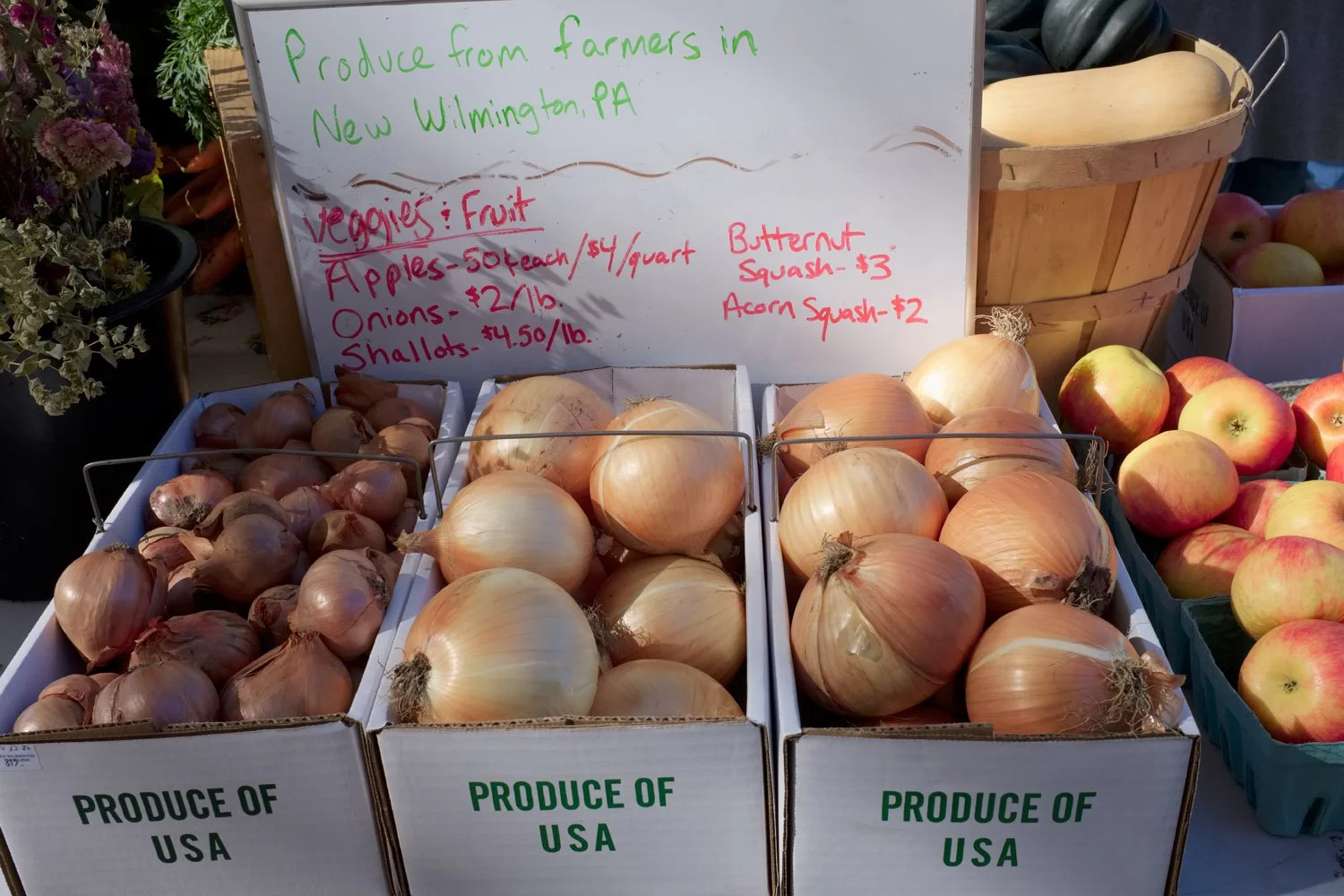
Shiloh Farm also sells vegetables from other sustainable farmers in Pittsburgh’s larger region, so that it can offer its customers a wide range of fresh food.
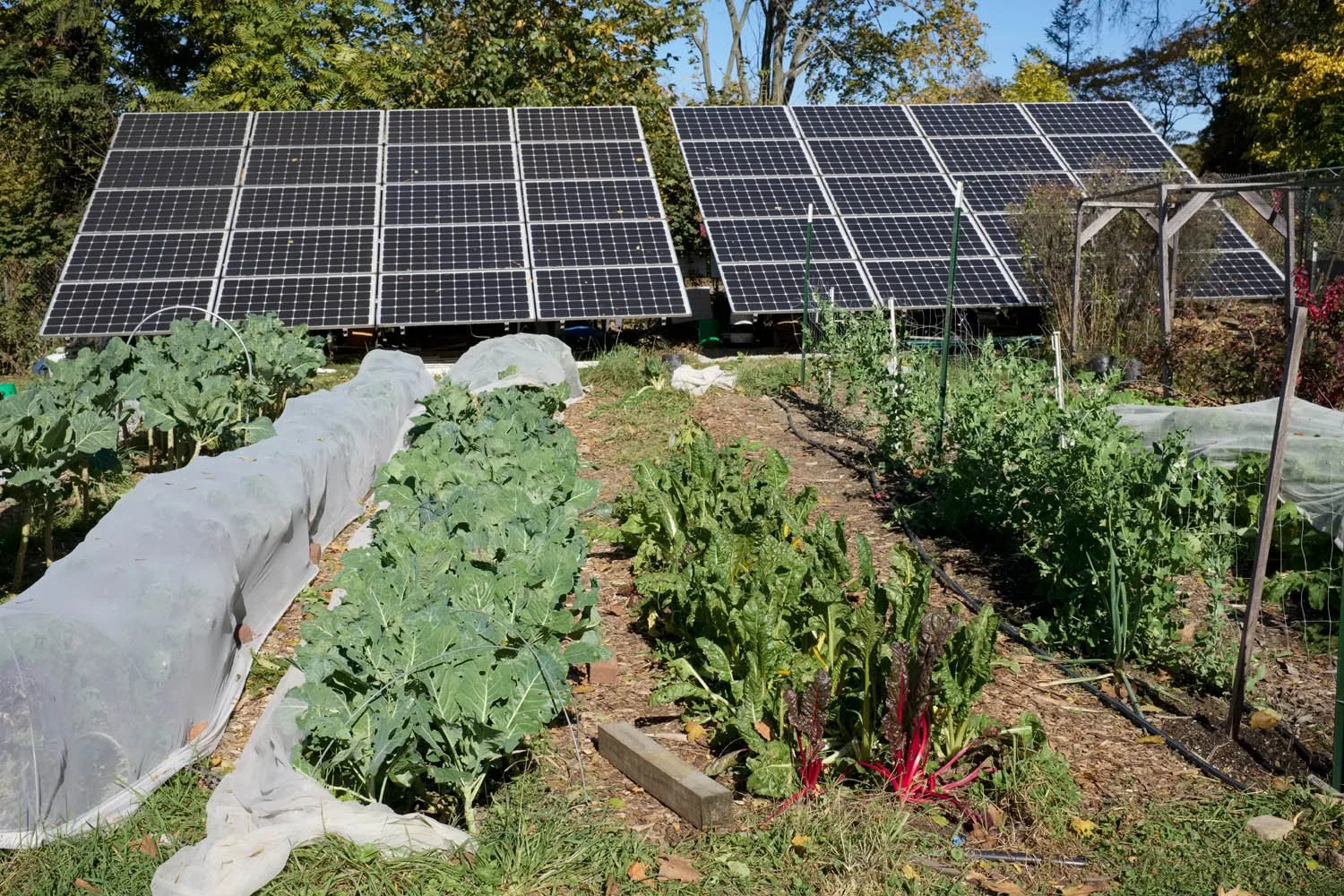
The garden’s back perimeter is marked by a large solar array, which feeds into the neighboring home. The soil has been tested and found clean so there is no need to use raised beds, the vegetables can be grown in-ground.
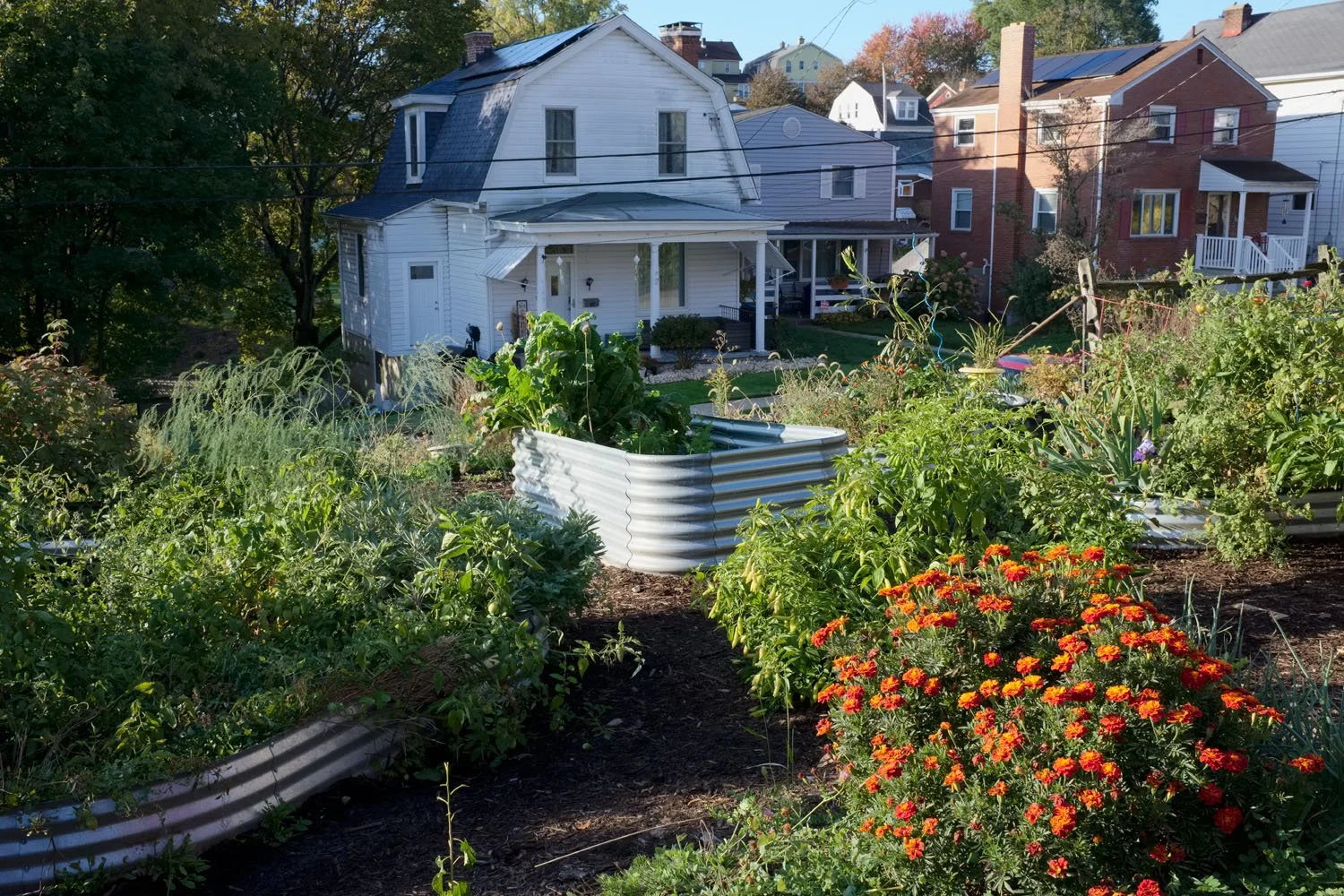
West View Urban Farm worked with Grow Pittsburgh, a nonprofit organization that supports and promotes urban agriculture in the Pittsburgh region, to do soil testing. Farm manager Jodi McLaughlin: “Our soil test came back with high levels of arsenic and lead, which is why we do all food growing above-ground in raised beds filled with high-quality soil and compost. Meanwhile we're working on remediating the soil.”
Founded in 2022, West View Urban Farm is located on the Casper Reel cabin site in the borough of West View in Allegheny County. It is the oldest standing building in the North Hills of Pittsburgh. Reel, who built it in 1794. was a Revolutionary War veteran who had received 727 acres north of the Allegheny River as a recompense for his service in the army. He became a successful farmer and fruit grower.
Most of Reel’s orchard land around the original cabin is now a housing estate. The current owners, Jodi McLaughlin and her husband, bought the small, sloping piece that remained open from a developer.
“I guess, he wanted to flip it,” Jodi McLaughlin says, “but then he moved away to Florida during the coronavirus pandemic and just wanted to get rid of it. I grow food at our house, which is just about 10 minutes by foot from here, and we wanted to find a larger place that we could grow on, because I volunteered at the food pantry, the West View Hub, and they didn't always have fresh vegetables. We bought the land in 2022, and the following spring, we started growing on it. We've had two full seasons.” In 2024 the couple purchased another piece of land behind the farm to extend it.
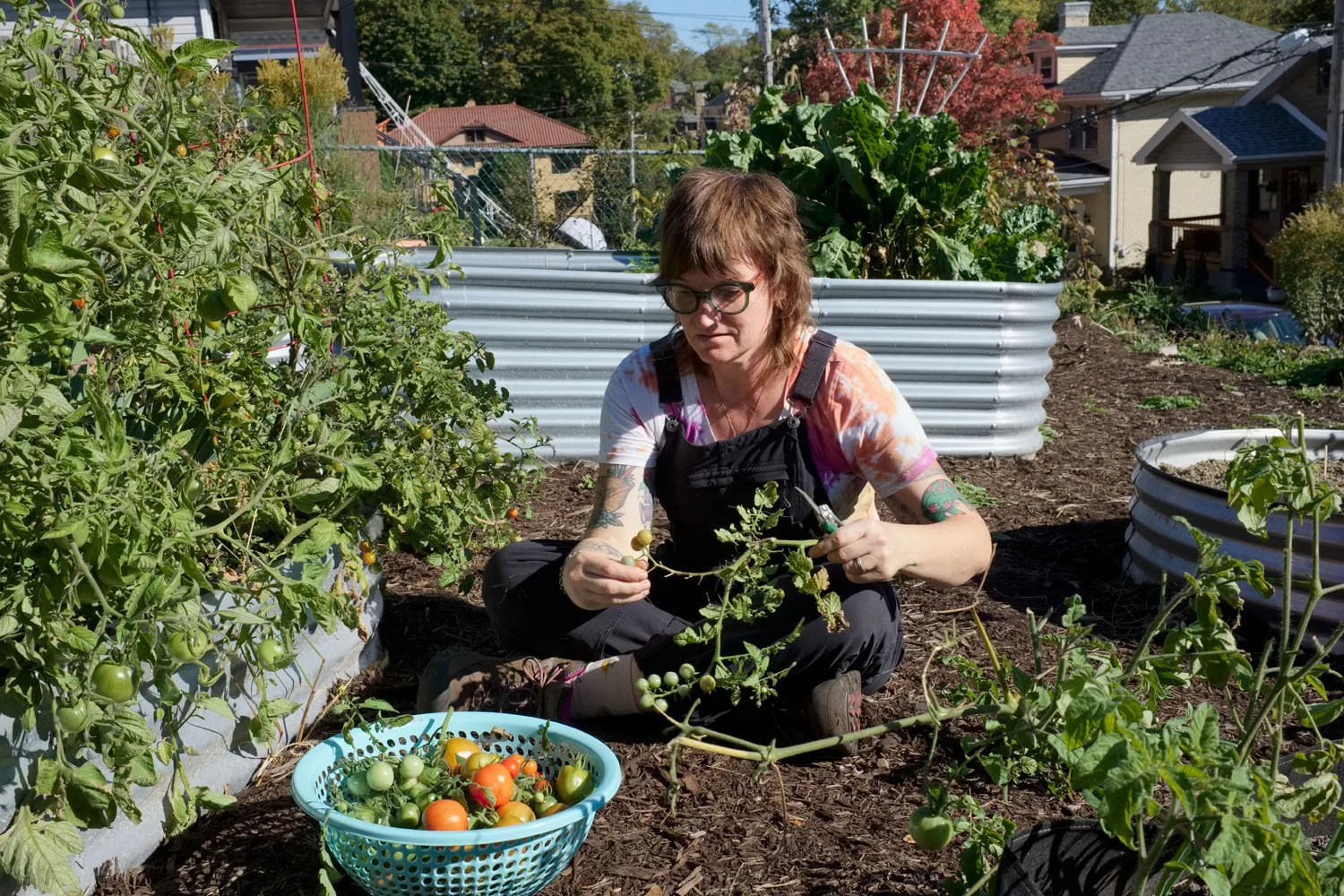
Jodi McLaughlin, founder of West View Urban Farm, harvests the last tomatoes of the season.
The farm has a nonprofit status. People from the neighborhood, including ten who sit on the advisory board, do volunteer work at the garden.
“We grow mostly fruits and vegetables, strawberries, blueberries, elderberry, local native fruit like pawpaw, and tomatoes, lettuces, cabbage, squashes, tomatillos. Twice a week we take the harvest to the food pantry. The West View borough only has about 6,000 people in it, and they have almost 1,000 households on their pantry roster. We have a lot of single-parent homes and seniors on fixed incomes and they just can't afford fresh food.”
Jodi's day job is consulting. “I do a lot of data analysis.” She is involved with the local Food Policy Council trying to advocate for urban agriculture. “I’m also trying to teach local investors and philanthropists on what they can do to improve the food system, and hopefully they'll take what they're learning from us and apply it when they're giving their money out.”
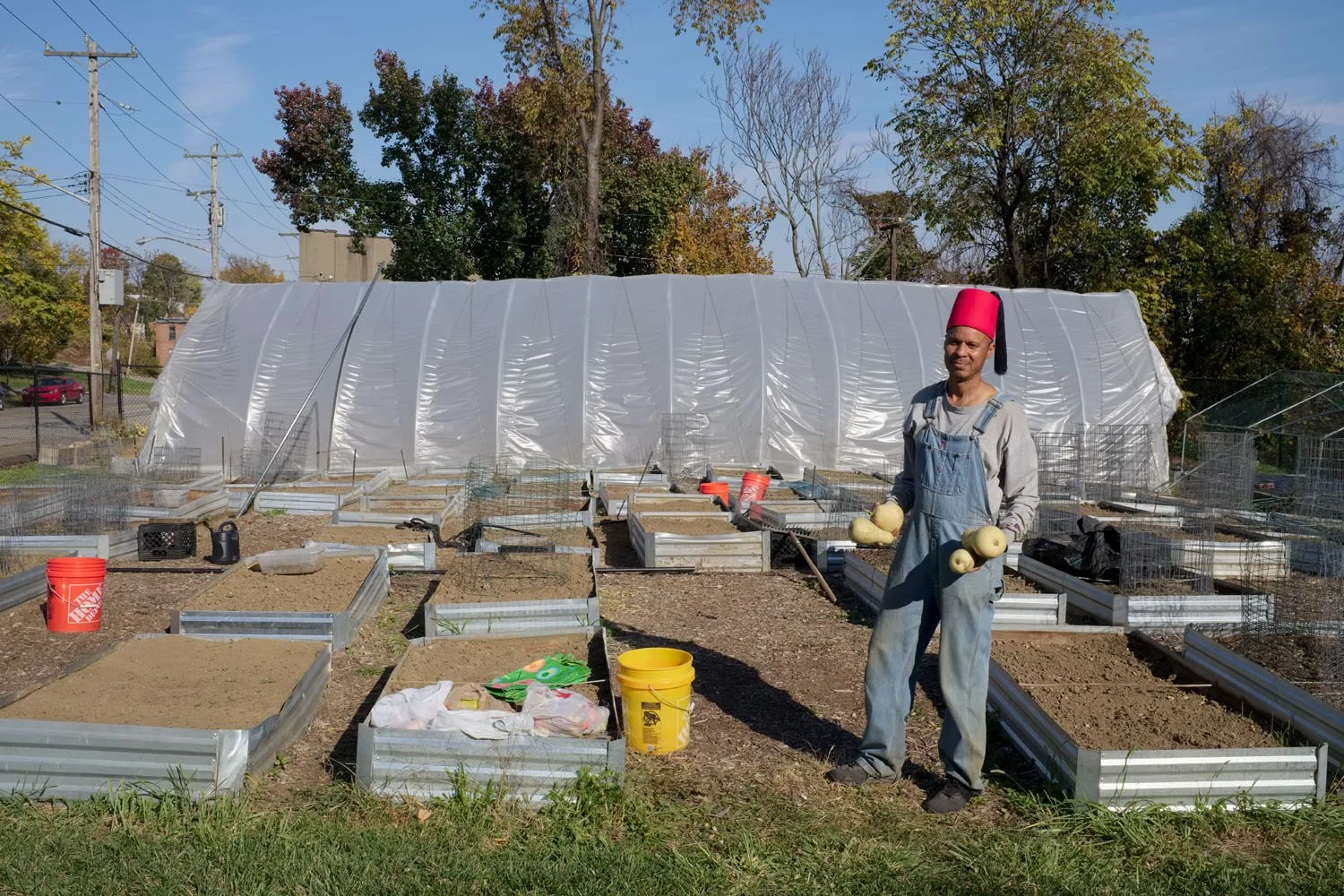
Kent Bey, a U.S. Navy veteran and founder of Peace and Friendship Farm, cleans out the last of his raised beds at the end of another growing season. “We're always encouraging people to come here to learn how to grow healthy, organic fruits, vegetables, and flowers. But if they don't want to do that, they're still welcome to the space, and they can just pull up a chair, have me be their host for the afternoon or just sit here and be unbothered.”
Peace and Friendship Farm was born when of a group of veterans decided to clean up a couple of vacant lots in the Hill District of Pittsburgh that were used as dump sites. When they took a shine to one of those lots and leased it through the city’s Adopt-a-Lot program, it bloomed into a organic vegetable, fruit and flowers garden.
Now the veteran-led urban farm allows veterans and community residents to learn the skills that enable them to grow healthy food and operate an urban farm of their own as entrepreneurs. The garden also functions as an outdoor community center.
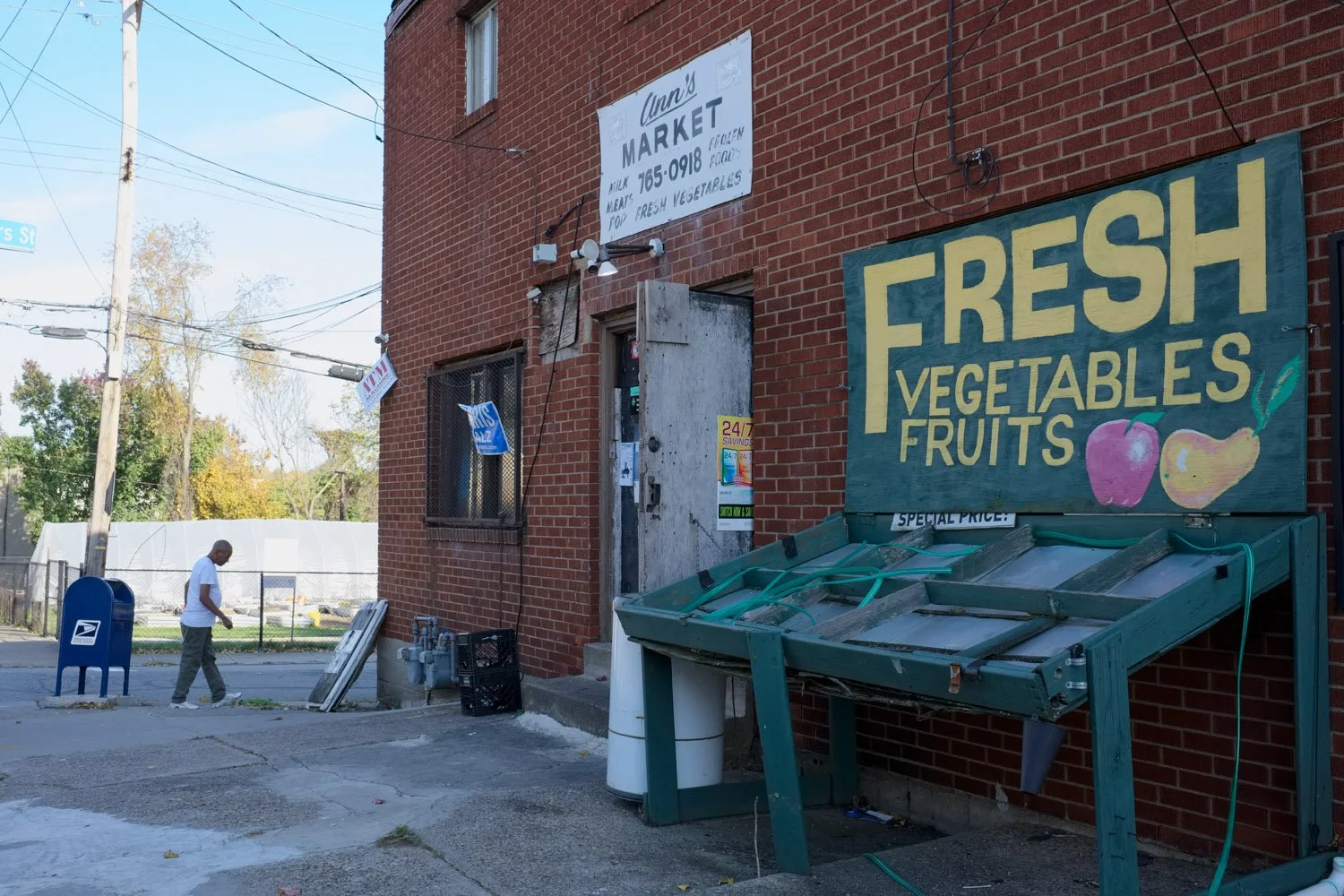
Peace and Friendship Farm is located on the corner of Somers Street and Webster Avenue, next to Ann’s Market, one of few stores in the Pittsburgh’s Hill District neighborhood that also sells fresh vegetables and fruits.
Photos and text © Ellen Kok, www.netherlight.org